News
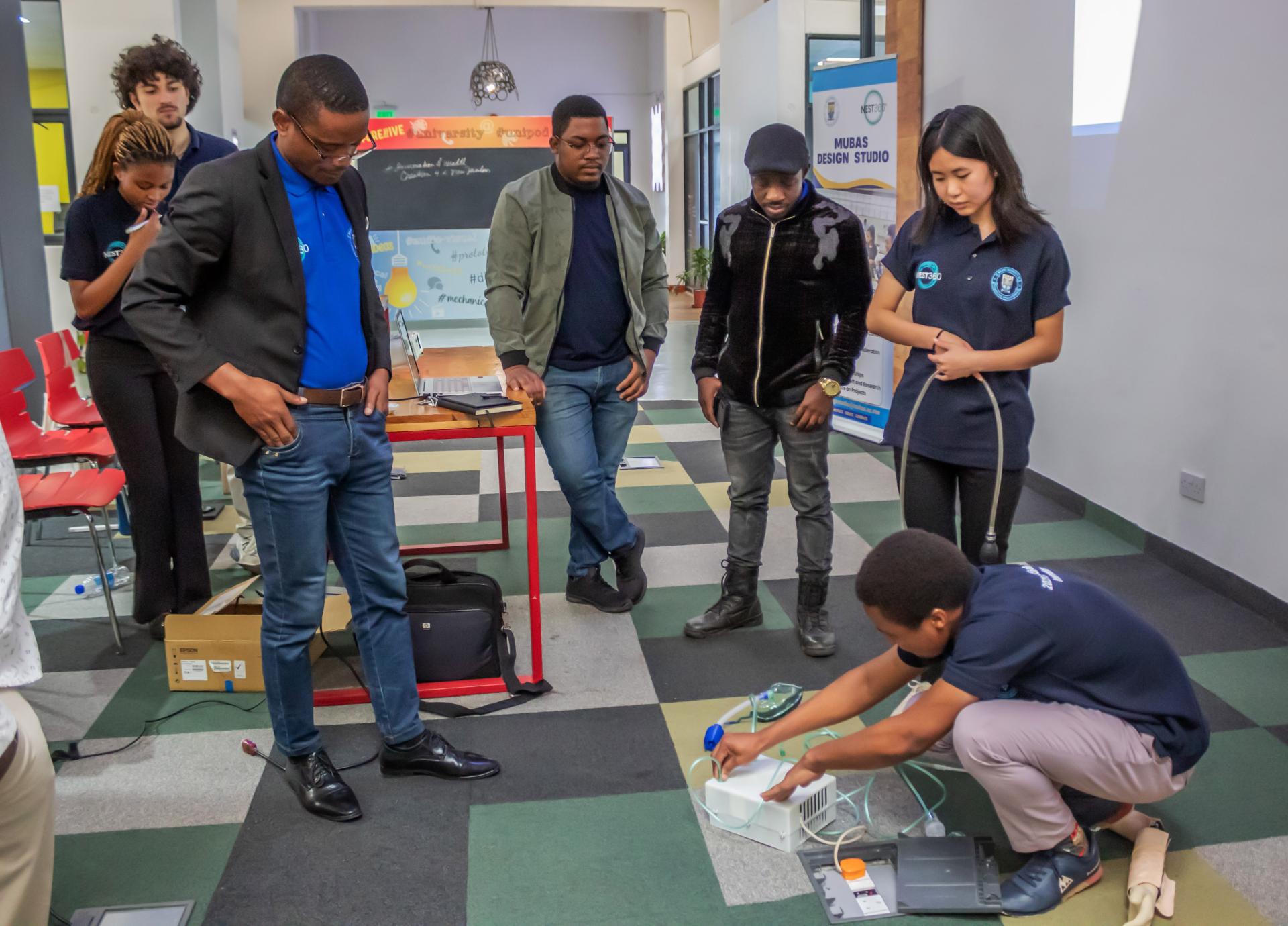
On 25 July 2025, MUBAS students Bright Kapito and Racheal Chiwaya, working alongside Katie Voong and Mehmet Acikel from Rice University, through the Rice360-MUBAS Biomedical Design Internship presented a range of healthcare technology prototypes at MUBAS, developed through the programme. Among the innovations was a dual-patient nebuliser designed for neonates, alongside a digital neonatal weighing scale with cloud-based tracking and a Chichewa-translated mobile application, as well as an ultrasound simulator to support radiographer training.
Beyond the prototypes themselves, the programme is providing students with an opportunity to apply their academic knowledge to real-world challenges, exchange ideas across institutions and develop practical skills in biomedical engineering, prototyping and problem-solving. The exchange programme brings together MUBAS and Rice360 students, with MUBAS students visiting the United States and Rice360 students visiting Malawi, providing opportunities to exchange knowledge, explore new ideas and learn from different academic and cultural environments.
For MUBAS, the partnership with Rice360, supported by the wider NEST360 initiative, reinforces the importance of practical learning and international collaboration in preparing graduates to respond to emerging national needs. By connecting students with healthcare professionals and providing opportunities to develop and present their ideas, the programme helps bridge the gap between academic training and the practical application of knowledge.
Reflecting on the experience, Racheal Chiwaya shared how working with her counterparts from Rice University sharpened her skills.
“Visiting a rural clinic and engaging with healthcare workers helped me understand the real needs of the people. The internship taught me that meaningful innovation goes beyond technical skills; it begins with listening to users, understanding their challenges, and developing practical solutions that make a difference,” said Chiwaya.
According to Chikumbutso Walani, Design Studio Engineer at MUBAS, initiatives such as the biomedical design internship are important in building local capacity to develop technologies that respond to Malawi’s healthcare needs.
“This initiative has demonstrated how international collaboration can strengthen Malawi’s capacity to develop locally relevant healthcare technologies. The innovations showcased today strengthen local expertise in biomedical engineering, prototyping and problem-solving, supporting affordable, context-appropriate healthcare solutions while advancing a number of Sustainable Development Goals through improved healthcare, practical interdisciplinary learning and local technological capacity, and partnerships,” he said.
As MUBAS continues to strengthen its commitment to applied learning, research and innovation, initiatives such as the Rice360-MUBAS Biomedical Design Internship demonstrate the potential of higher education partnerships to develop solutions that respond to community needs and contribute to the country’s sustainable development.
Similar Posts




Latest News
All news