News
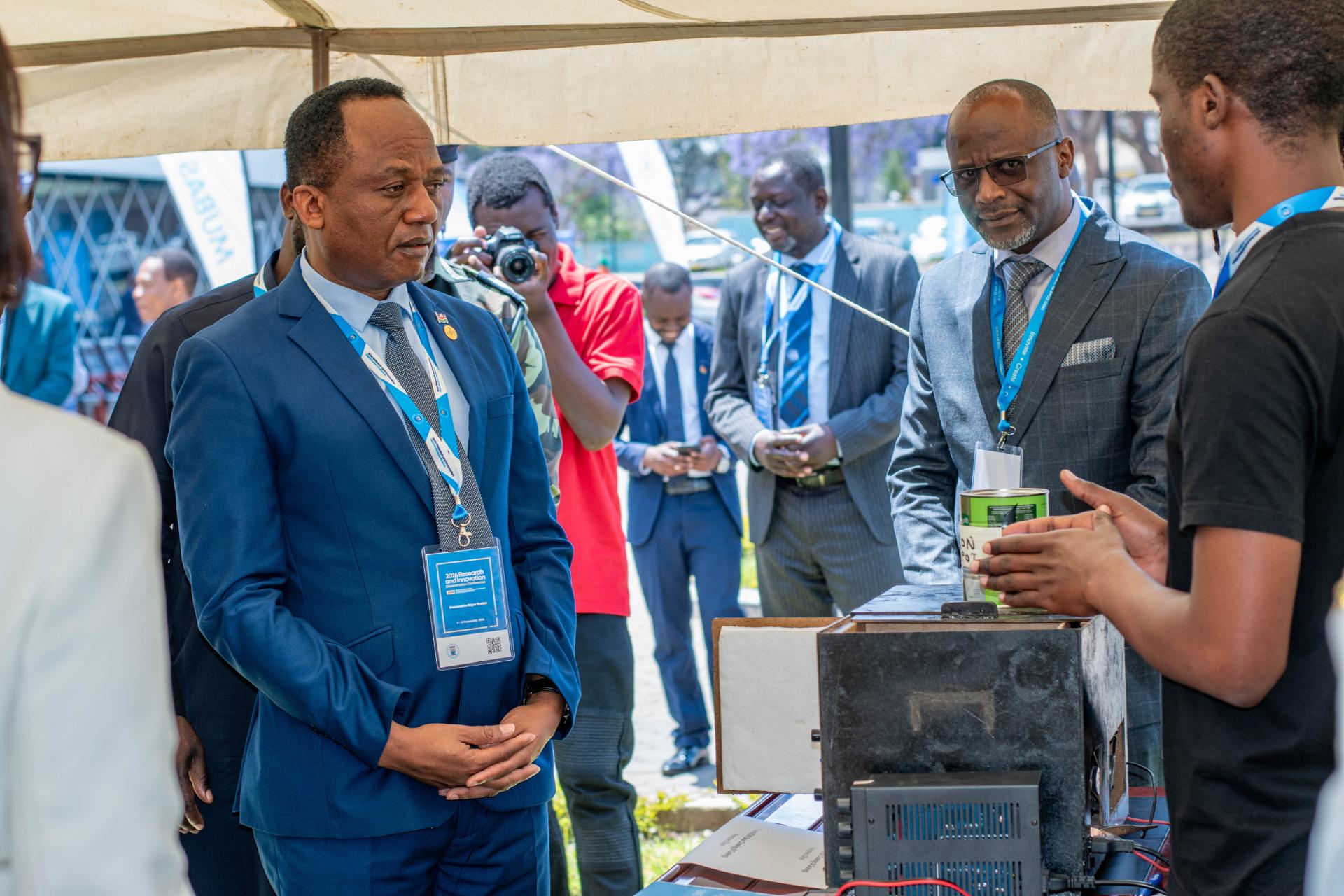
Deputy Minister of Industrialisation, Business, Trade and Tourism, Hon. Edgar Tembo, MP, said this on 17 September 2026 when he officially opened the inaugural MUBAS Research and Innovation Dissemination Conference at the university’s main campus in Blantyre.
Tembo said that as the country continues to grapple with the adverse effects of climate change, economic downturn and youth unemployment, there is a need to embrace opportunities arising from technological advancements such as artificial intelligence, renewable energy and digitisation as alternative means of generating income and creating employment.
“The challenges we face today should not discourage us, but should rather challenge us on how we turn these challenges into opportunities for innovation, entrepreneurship and wealth creation,” said Tembo.
He further challenged universities to take a leading role in the country’s transformative agenda through practical research and solution-based innovations.
“Malawi cannot afford to let brilliant research gather dust, young innovators struggle without pathways to commercialise their ideas, or university breakthroughs remain trapped in laboratories while industries import solutions that our own people have the talent, knowledge and capacity to develop, commercialise and scale locally,” he added.
Meanwhile, MUBAS Deputy Vice-Chancellor, Professor Ishamael Kosamu, said the conference was organised to provide a platform for meaningful engagement among academia, policymakers and industry players.
He said the initiative was intended to ensure that knowledge is not confined to classrooms, workshops and laboratories, but instead becomes a key enabler of economic development.
Professor Kosamu added that the university’s goal is to produce graduates who can bring about positive transformation in their communities and beyond.
“We believe that universities must not only produce graduates, but they must also become active engines of national development,” he said.
He added that the university has undertaken a number of practical initiatives in agriculture, mining, wood technology and engineering aimed at contributing to the socio-economic development of the country.
Delivering a keynote address at the conference, UNDP Malawi Deputy Resident Representative Dr. Chika Charles Aniekwe said Malawians should not merely be consumers of external knowledge, but should also become producers, owners and exporters of knowledge, innovation and intellectual property.
He noted that the country possesses abundant natural resources, including land and rich biodiversity, which can provide a springboard for its economic development agenda, particularly among the youthful population.
“Economic power increasingly belongs not only to the country that possesses the raw material, but to the country that possesses the knowledge required to transform it,” said Dr. Aniekwe.
He added that the country should not only train its young population for formal employment, but should also place greater emphasis on equipping young people with job-creation and entrepreneurial skills.
“We should also broaden indigenous knowledge beyond agriculture and traditional medicine. Music is knowledge. Storytelling is knowledge. Design is knowledge. Cuisine, language, fashion and cultural heritage are intellectual capital. Culture can become intellectual property; intellectual property can generate royalties; royalties can generate foreign exchange; creative enterprises can create jobs and strengthen national soft power,” he advised.
At the conclusion of the two-day conference, Rosanie Daudi emerged as the Best Student Researcher, while Innocent Malonda Ndovie received the Best Research Paper Award.
In the Students’ Innovation Category, Moment by Madoso scooped the Best Student Innovation Award, while Tiguleni Academy and Jiya came second and third, respectively.
During the closing ceremony, Professor Kosamu hailed the conference as a great success and described it as an important platform for collaboration and networking within the university and beyond.
The sentiments were echoed by many participants, who said the conference had helped create valuable ecosystems for research and innovation.
Sponsors of the conference included United General Insurance (UGI), the Malawi Revenue Authority, the Institute for Continuing Education, the Malawi Communications Regulatory Authority (MACRA) and the National Commission of Science and Technology.