News
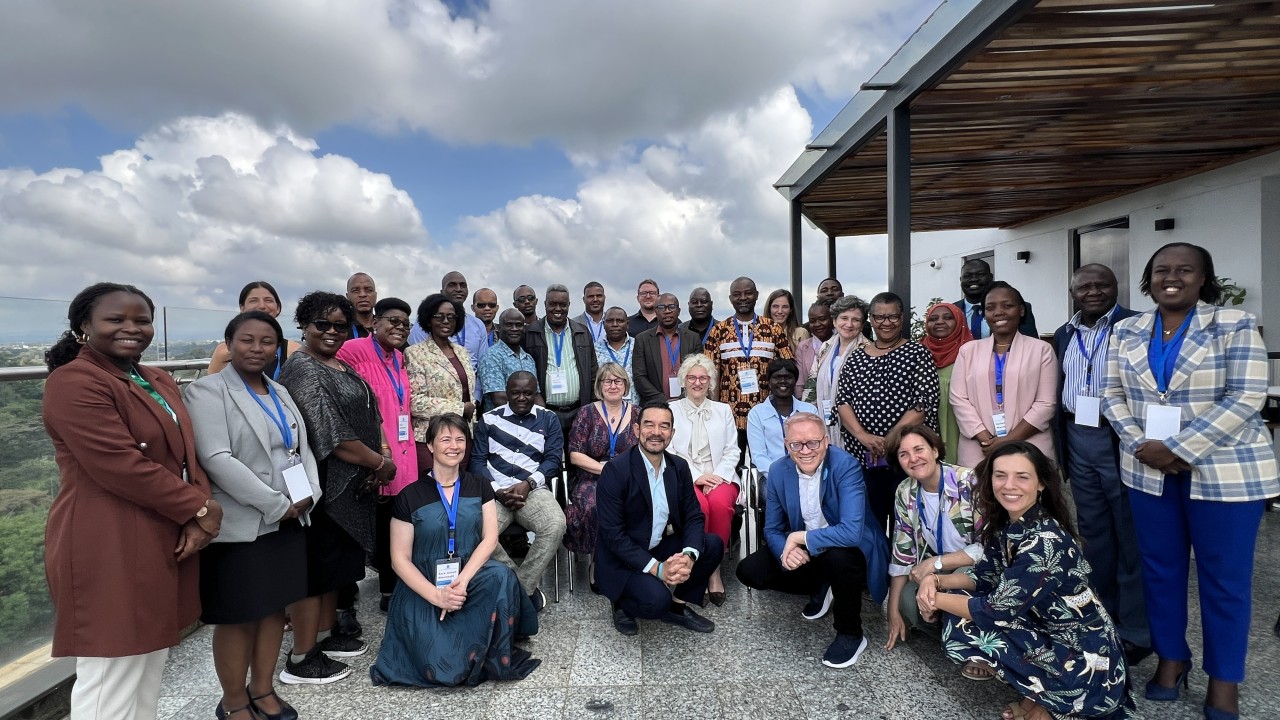
As part of the landmark Academia for Social and Behavioural Change Network launched by UNICEF on 24-28 November 2025 in Nairobi, Kenya, MUBAS joined 24 leading universities from 16 countries across Eastern and Southern Africa. The Network, also supported by UNESCO ESARO, brought together institutions from Malawi, Botswana, Ethiopia, Kenya, Rwanda, South Africa, Tanzania, Uganda, Zambia, Zimbabwe and others with a shared mandate: to accelerate progress on children's rights through evidence generation, skills building and policy influence.
Representing the University at the 2025 UNESCO - ESARO Academia for SBC Network Symposium in Nairobi, Dr. Flemmings Fishani Ngwira, his participation underscores MUBAS' commitment to advancing localized, rigorous research that feeds directly into national and regional SDG monitoring. MUBAS Contribution to SDG Data and Measurement, SDG 3 Good Health and Well-being through the SBC Network's shared research agenda, MUBAS is collaborating on multi-country studies on health-seeking behaviours, nutrition, immunization, hygiene and adolescent health. Data is collected using harmonized SBC measurement tools co-developed with UNICEF and hosted on the dedicated platform academia 4 sbc network, enabling cross-country comparison of behavioural indicators that influence child mortality and maternal health.
Further, SDG 5 Gender Equality and SDG 10 Reduced Inequalities, MUBAS researchers have contributed to evidence on harmful social norms including child marriage, gender-based violence and school dropout that perpetuate inequality. The collaboration enables MUBAS to gather community-level behavioural data, disaggregated by gender, disability and geography, to inform policies that leave no child behind. This aligns with the Network's focus on understanding and influencing human behaviour for positive community change.



Latest News
All news