News
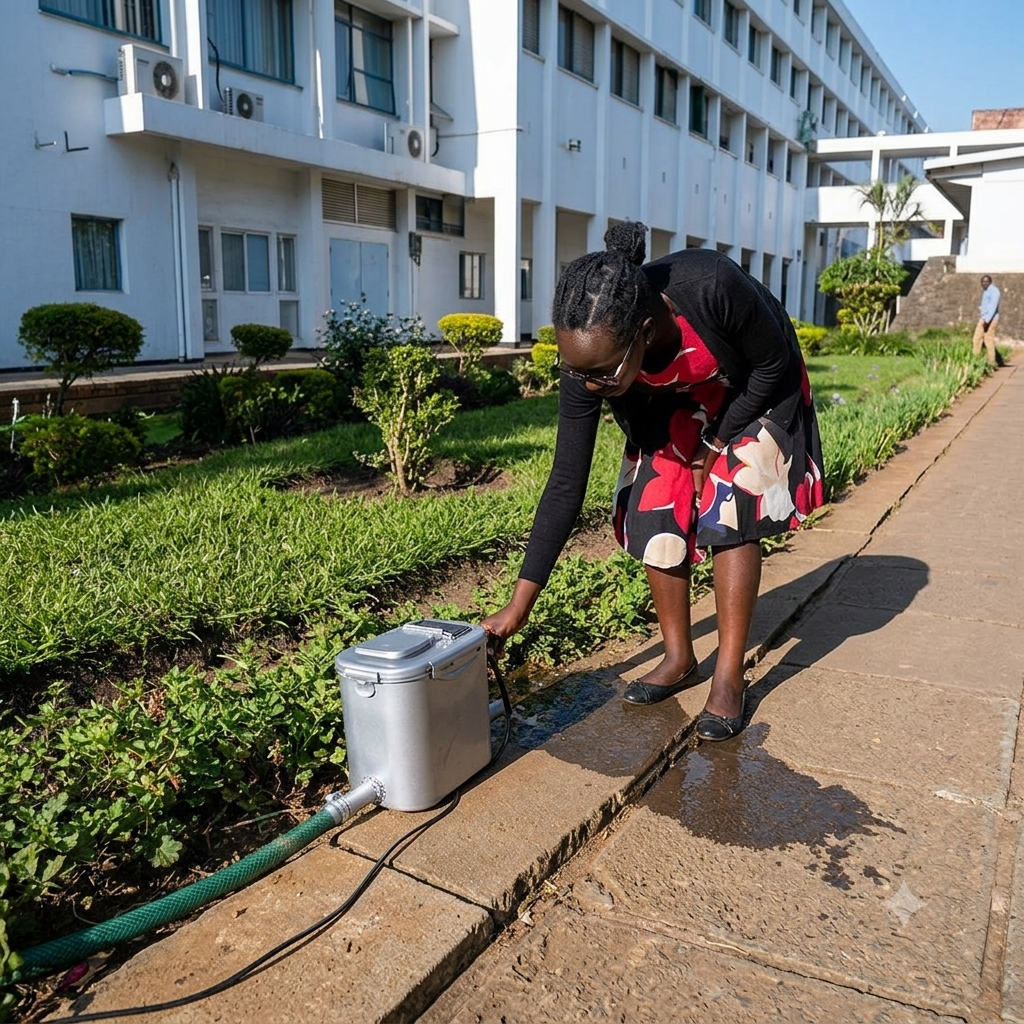
The project was developed by Computer Engineering students Takondwa Mphande and Tatiana Zingeni alongside Telecommunications Engineering student Kumbukani Mwambembe. The idea emerged following a visit to Blantyre Water Board, where the students sought to understand challenges associated with existing prepaid water meters.
According to the students, conventional prepaid water meters rely on batteries that often experience reduced lifespans due to high power consumption. The systems can also encounter challenges related to the accurate measurement of water usage, affecting billing efficiency.
To address these issues, the team designed a prepaid water meter powered by a solar panel, providing a continuous source of energy for the system. The innovation promotes energy efficiency by reducing dependence on battery power while ensuring the meter remains operational for extended periods. To enhance measurement accuracy, the students incorporated a Hall Effect Sensor capable of precisely monitoring water flow.
The prototype also features a customer mobile application that allows users to connect to the meter via Bluetooth, purchase and load water tokens, monitor their water balance, and track consumption in real time. The feature enables customers to better understand their water usage patterns and make informed decisions about their consumption.
During the development process, the team faced challenges related to battery capacity and sourcing suitable components for the prototype. Despite these obstacles, they successfully developed a functional system capable of monitoring water consumption while displaying key information such as remaining balance and battery status.
The students believe the innovation has the potential to improve efficiency in prepaid water management systems while offering customers greater visibility over their water usage. They further recommend future enhancements, including the integration of battery management systems and cellular communication technologies to enable remote monitoring by both customers and water utility providers.
The project highlights how engineering students at MUBAS are applying their knowledge and skills to develop sustainable energy solutions that address challenges in essential service delivery.




Latest News
All news